


Pipe boot
The rubber collar around a plumbing vent. Sun and heat crack it, and water follows the pipe into the attic.
The stain on your ceiling may not be where the water entered.
Water that gets under a shingle or past a flashing doesn’t drop straight down. It runs along the underlayment, the deck, and the rafters, and it shows up wherever it finally finds a low spot, sometimes several feet from where it got in. That’s why sealant on the spot right above the stain often doesn’t fix anything: the entry point is somewhere else, and it’s still open.
A pipe boot is a good example. Water can get in around a cracked or loose pipe boot, or around another roof penetration, then run along the pipe, the deck, or the rafters before it shows up as a ceiling stain, sometimes in a different room. The stain tells you where the water ended up. It doesn’t always tell you where it got in.
We check the roof around the stain, the flashing and penetrations, the nearby shingles, and the attic when we can reach it, and we photograph what we find. From pipe boots, roof vents, and flashing to valleys, drip edge, skylights, other penetrations, and the shingles themselves, we find the source before recommending a repair. (We don’t install skylights, but we do track down the leaks around them.) If a focused repair will last, we’ll explain that option. If the roof needs more, we’ll explain why.

The rubber collar around a plumbing vent. Sun and heat crack it, and water follows the pipe into the attic.
Off-ridge, turtle, and other roof vents. A failed flange lets water rot the deck around the opening.
A common leak spot. We check the unit, the curb flashing, and the roof next to it.
Metal at the eaves and rakes that sends water into the gutter and protects the fascia.
Where two roof slopes meet. Debris and worn metal are common causes, and a repair often solves it.
Metal at transitions: walls, chimneys, crickets, and step flashing. Sealant alone won’t last.
Water under a skylight may be coming from the glass or plastic, from the curb flashing, or from the roof next to the curb. Those are three different repairs, so we find out which one it is before recommending anything.
If the leak is the roof, we repair the roof. If it’s the skylight itself, we document that. We don’t install or replace skylight units.
Drip edge is the metal strip along the eaves (the low edge) and the rakes (the sloped sides). Without it, water can run back under the shingles at the edge, soak the fascia, and rot the wood you see from the yard. It protects the fascia and soffit, the last course of shingles, and the gutter hangers.
Missing drip edge usually isn’t the cause of a leak inside the house, but it protects the roof edge over time. It’s easy to miss from the ground, so we check for it on purpose and list it in your proposal. More on flashing and edge metal.
A valley is the channel where two roof slopes meet, and all the water from both sides runs there. Leaves, twigs, and live oak debris sit in that channel and hold water against the metal. The metal wears, nails pop, and the cut shingles on either side curl. Then the stain shows up on a ceiling nowhere near a pipe.
A worn valley can cause a leak, but on its own it doesn’t mean you need a new roof. A lasting valley repair has leak barrier underneath and metal set into the shingle course, not tarred on top.
Where a roof meets a wall, a chimney, a curb, or another roof plane, metal flashing turns the water. These are the flashing problems we trace leaks to most often:
The fix: replace any rotten deck first, install leak barrier at the wall, and set new metal in the shingle course. Caulk can help at a collar, but it isn’t a substitute for metal. How flashing fits into the roof system.
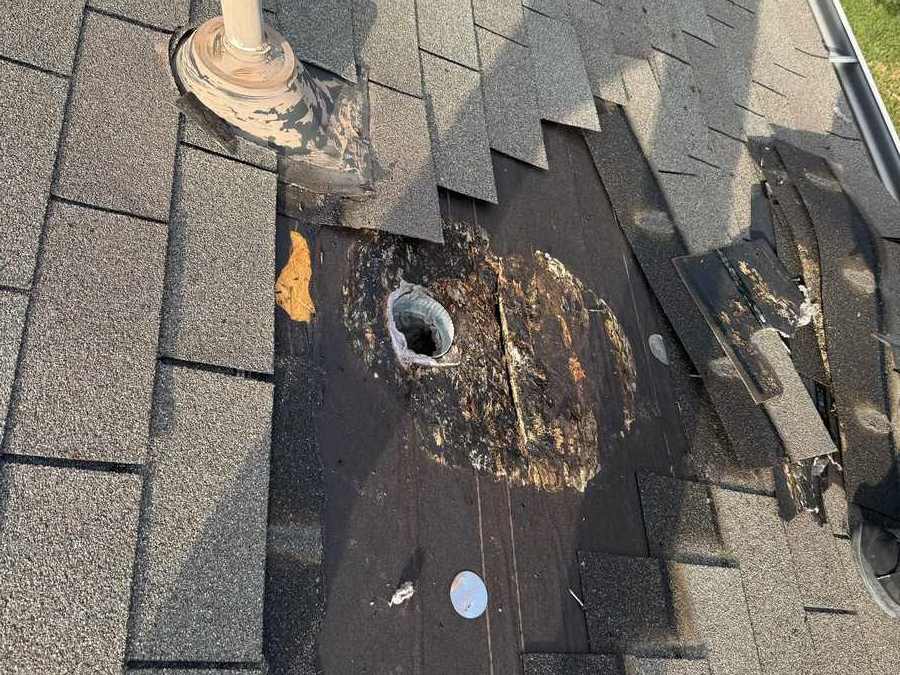
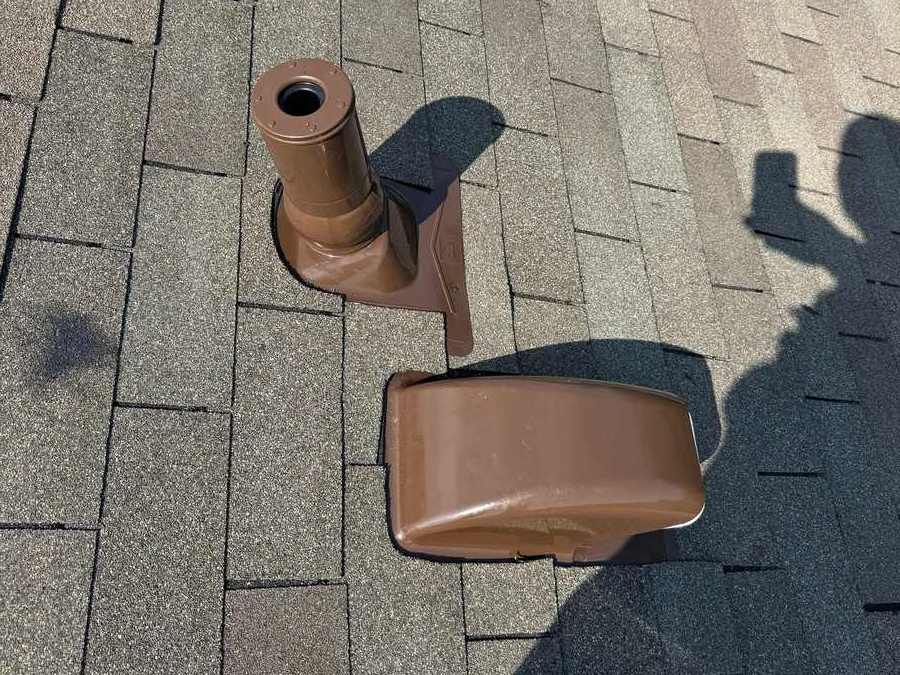
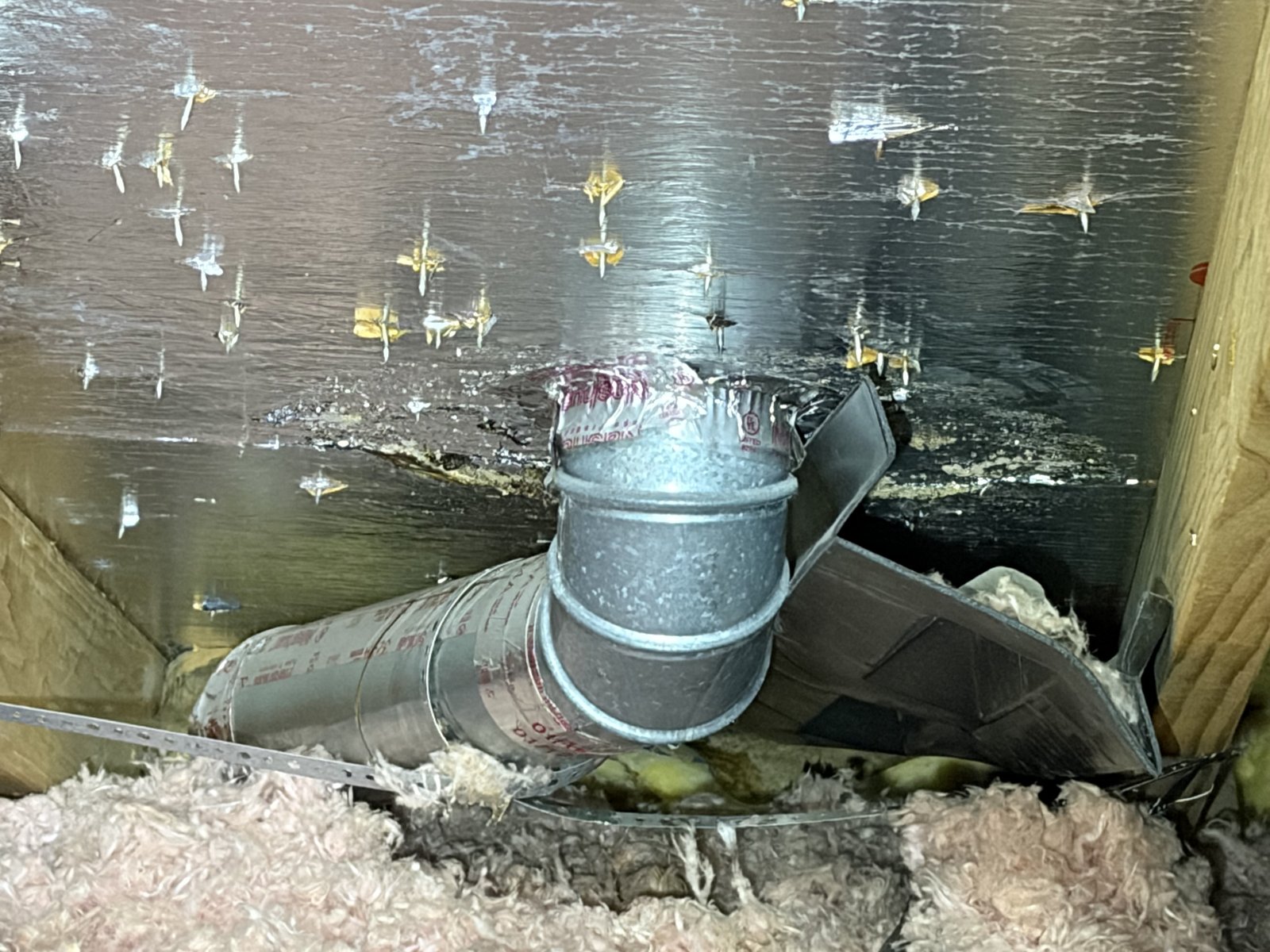
With the shingles pulled back at a roof vent, the source of this stain was clear: rot at the vent. The attic photo shows another leak path we traced, a Master Flow pipe boot hanging at a dryer vent, the kind of source you only confirm looking up. Once the source is found, the fix is a roof repair. On the vent job, the vent and pipe boot were reset, and the stain didn’t mean the homeowner needed a new roof. How we repair roof leaks.
If the roof has reached the end of its life (multiple layers, brittle shingles, widespread hail damage), we’ll tell you and explain your options. What a first visit includes.